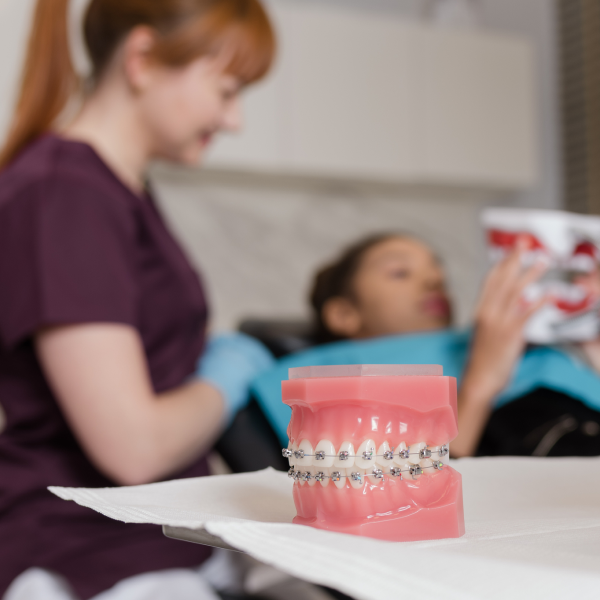
Braces are an orthodontic treatment tool with which teeth straightening and bite corrections can be performed. Braces effectively solve orthodontic problems of various nature and complexity. Wearing braces can adjust the position of the teeth, so they are often recommended for patients who have crooked or clenched teeth.
Braces can serve not only to straighten teeth, but also to correct the bite. This means that this orthodontic appliance can also eliminate the problem of irregular bite. Treatment with braces can be carried out for both children and adults.
In modern dentistry, for the purpose of orthodontic treatment, not only metal braces can be used, but also other alternatives to braces that perform the same function, but look more aesthetically pleasing.
Breketai ir profesionali ortodontinė priežiūra teikiama visose didžiosiose Šypsenos akademijos klinikose Vilniuje, Kaune ir Klaipėdoje.

Aligner straightening solves common orthodontic problems such as malocclusion, tooth rotation, crowded teeth, misaligned teeth and other problems with inharmonious dental arches. Malocclusion can contribute to the development of health problems such as headaches and jaw pain. Crooked teeth can make chewing and speaking more difficult and increase the risk of tooth decay (asymmetry or an atypical position in the jaw makes the surface of the teeth more difficult to clean).
The main reasons for which it is recommended to undergo treatment with braces:
Irregular position of the teeth.Doctors routinely prescribe braces to people with crooked, crowded, or overlapping teeth. Crooked teeth are not just a problem of an aesthetic nature. Due to the irregular position of the teeth, the teeth grow faster, and there is a greater risk of chipping them off. Also, crooked or clenched teeth are more difficult to care for and clean. Qualitatively not removed food residues and plaque adversely affect the condition of the teeth, increasing the risk of caries and gum disease. Braces do an excellent job of straightening teeth and prevent problems of this kind.
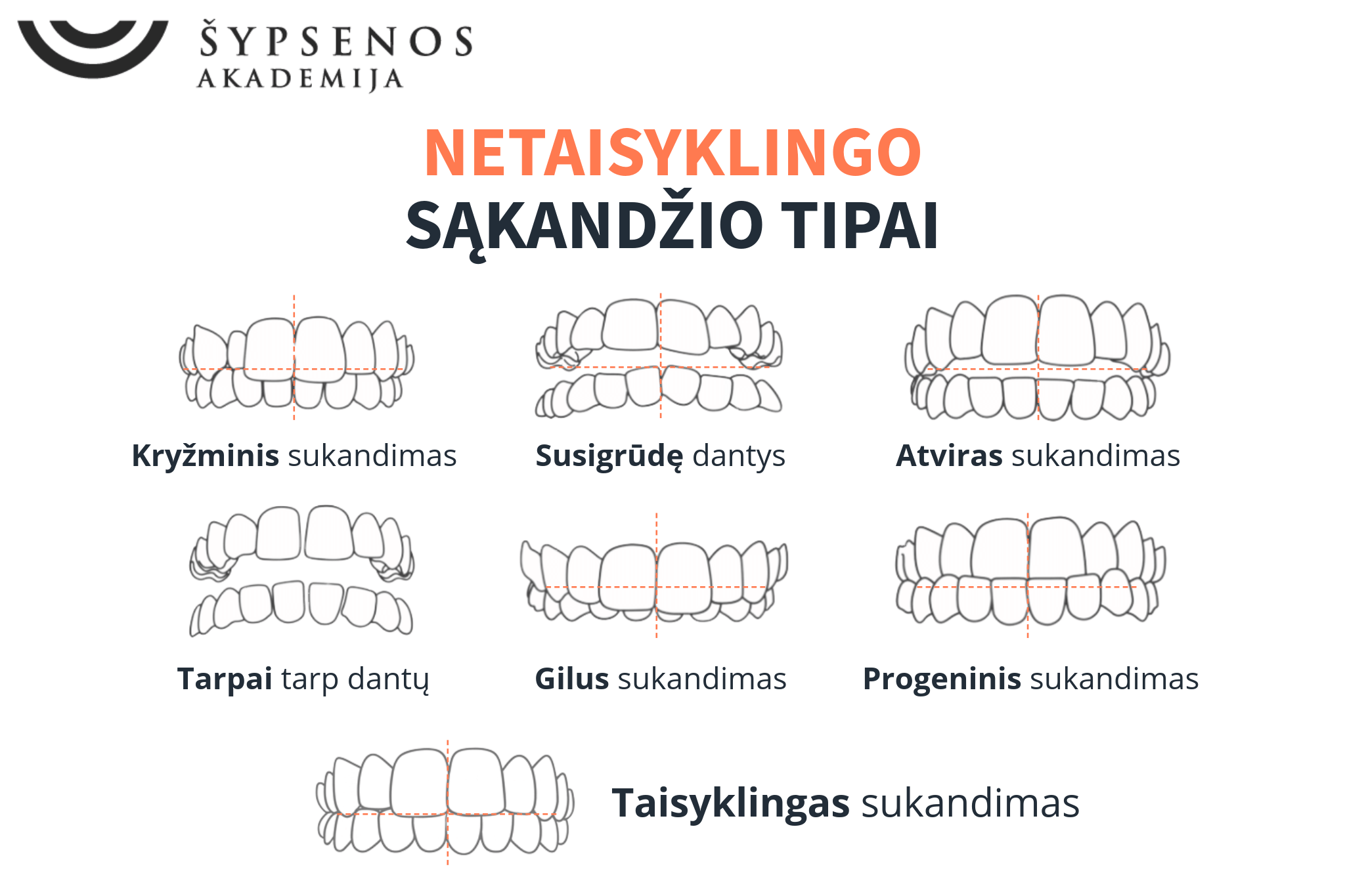
Irregular bite.Braces allow you to adjust not only position of the teeth, but also irregular bite. An irregular bite is called a condition in which the upper and lower teeth do not meet in their natural position. Irregular bite is also not just an aesthetic flaw. Irregular bite can lead to a decrease in chewing efficiency. Jaw pain, headaches may also occur. Irregular bite can manifest itself in different ways: deep bite (the upper teeth strongly cover the lower teeth in the vertical direction), or open bite(there is a gap between the upper and lower front teeth in the vertical direction). Generally speaking, irregular bite is a disorder in which the upper and lower teeth do not touch as they should.
Gaps between the teeth. This method of straightening teeth can also be chosen for those people who have gaps between their teeth. The gaps between the teeth look unaesthetic. In addition, due to them, disorders of speech and chewing functions can also occur. Too large interdental spaces can also damage the condition of all teeth. Because of them, uneven wear of the teeth, inflammation of the gums can occur. Braces gradually reduce the size of the gaps and improve both the aesthetics and function of the mouth.
Planning of other dental procedures.Orthodontic problems can complicate the course of other dental procedures. Therefore, treatment with braces should also be carried out when other types of procedures are planned. For example, when planning one or more restoration of teeth with implantsin preparation for prosthetics or certain aesthetic procedures.

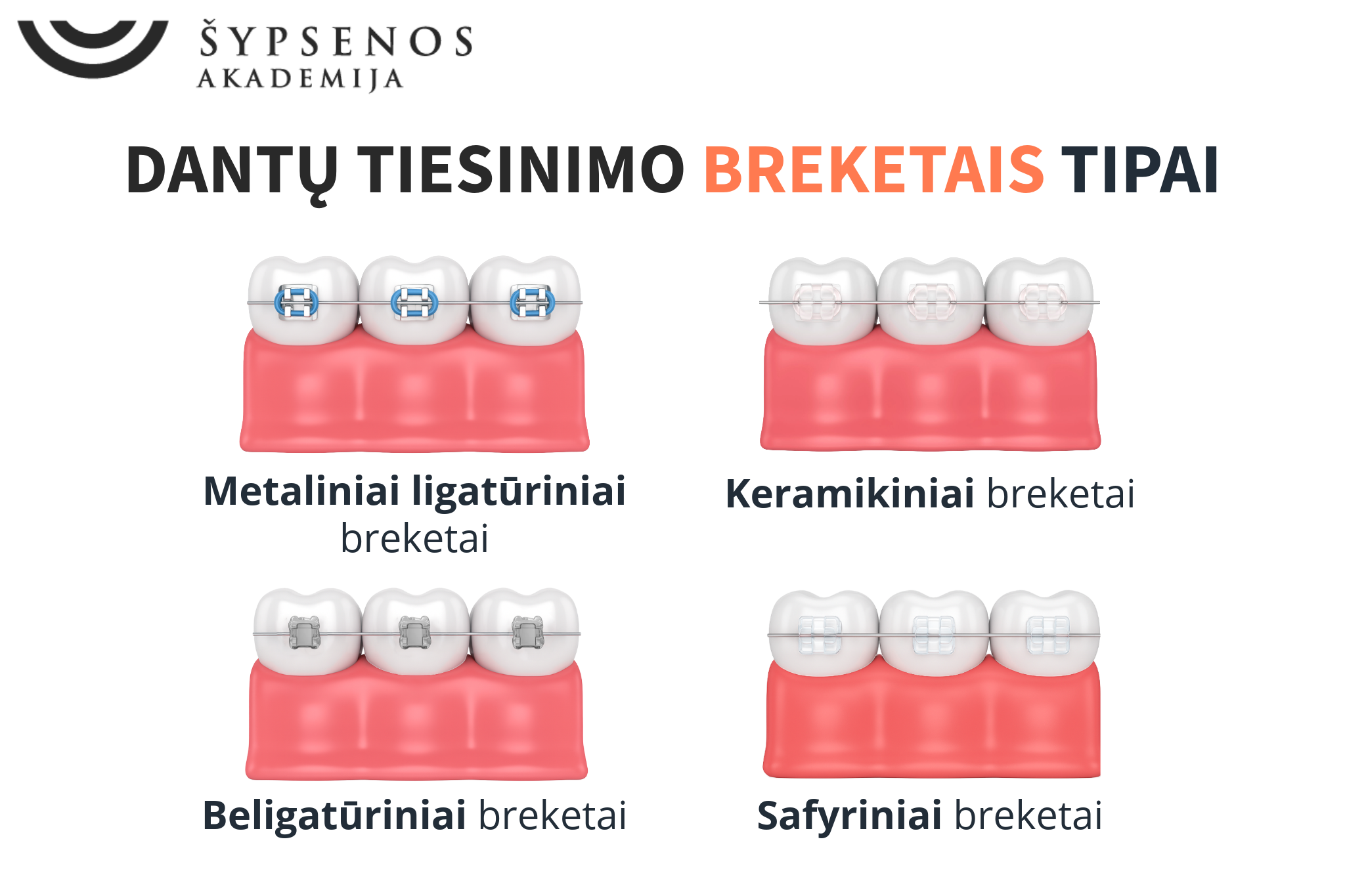
Orthodontic treatmentcan be performed with different types of braces. The price of braces, the convenience of wearing, their appearance and the duration of treatment depend on the type. In modern dentistry, the most commonly used types of braces are:
Metal ligature braces.These are traditional metal braces that have been used for orthodontic treatment for many years. They are effective and reliable. These braces can be considered the cheapest, but the least comfortable and aesthetic type of braces.
Belligature braces. This is a type of braces, characterized by a more convenient locking mechanism. Belligature braces are more expensive than standard metal braces, but they cause less discomfort because they have fewer wires.
Ceramic braces. Ceramic braces are a more aesthetic alternative to metal braces. The color of these braces is very similar to the natural color of the teeth, which makes them more attractive, visually less noticeable. However, ceramic braces need to be handled a little more carefully, as they are fragile enough.
Sapphire braces. Sapphire braces for teeth straightening ensure a particularly aesthetic course of treatment, as they are completely transparent. In addition, in comparison with ceramic ones, they are more durable, more difficult to damage. The prices for these braces are the highest.
The tests needed for diagnosis and treatment include panoramic photography, cephalogram, digital dental examination and photographs according to the orthodontic protocol.
The orthodontist draws up a preliminary straightening plan and a course of treatment that is presented to the patient.
Before orthodontic treatment can begin, the teeth must be healthy and free of any pathology. A preliminary treatment plan is presented - a healthy mouth plan is drawn up and the necessary appointments are scheduled.
For detailed treatment planning, a final dental scan is performed. If more than 3 months have passed since the initial scans, they are repeated.
We assess each case individually and adapt to the financial possibilities of the patient. For this purpose, an extremely flexible system of payment for services is applied. Do not delay treatment because of finances, we assure you - together we always find a compromise.
For your convenience, we cooperate with private health insurance companies, so everything will be even faster and more convenient, and if we do not have direct cooperation with your insurance company, we will be able to provide a medical statement and invoice after providing the service.
Orthodontic aligners, also known as "aligners", are clear plates that cover the entire arch of the teeth, similar to tooth whitening or bruxism aligners. Their main advantage over conventional braces is aesthetics and comfort. They are almost invisible and can be removed when needed (up to 2 hours a day). Easier to maintain, no discomfort when eating, no burden on oral hygiene and perfect for travelers.
The only disadvantage of capos compared to braces is self-control. The treatment is self-contained and it's easy to just forget about the cap!
No. The effectiveness of the aligner-straightening method is not inferior to orthodontic treatment with braces, although if the case is more complex, the treatment can be combined with the use of intermaxillary elastics and mini-implants.
Usually, patients only experience dialect changes during the adaptation period - the first weeks of treatment. Afterwards, they disappear completely or remain minimal.
nepasitarnauja ir dantų priežiūros labui. Breketus nešiojančiam žmogui dantis valyti ir prižiūrėti yra sudėtingiau. Breketų nešiojimas taip pat įpareigoja dažniau atlikti profesionalią burnos higieną. Jeigu pacientas dantis prižiūri atmestinai ir per retai lankosi pas burnos higienistą, dėl dantų tiesinimo breketais didėja ir burnos ertmės ligų atsiradimo rizika.


Don't miss out — take advantage of exclusive offers!